Semponite: The Display Font That Brings Handcrafted Charm to Your Brand
There's a moment in every design project where you realize the typography isn't just holding words—it's telling a story. That realization hits hard when you're staring at a wedding invitation mockup, and the font you've chosen feels sterile, corporate, or just plain wrong for the occasion. You need something with personality, something that feels like it was written with care, not generated by a machine. That's where a typeface like Semponite enters the conversation. It's not just another display font; it's a design asset built for projects that demand authenticity, warmth, and a distinctly human touch.
Why This Typeface Feels Different from Generic Display Fonts
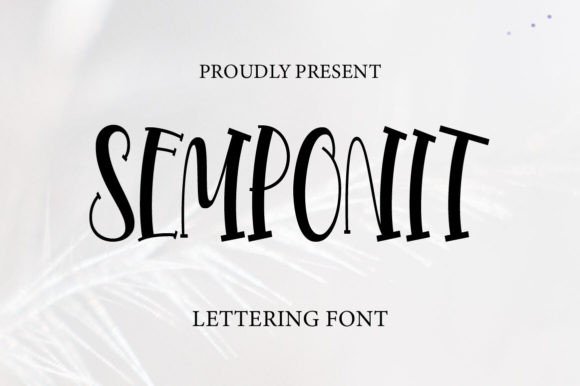
Most display fonts fall into predictable buckets: bold and loud, retro and quirky, or sleek and minimal. Semponite carves its own space by blending elegant lettering style with an organic, almost hand-drawn quality. The letterforms have subtle imperfections—the kind that make handwritten fonts feel genuine—while still maintaining the structure and readability you need for professional work. It's a premium font that doesn't sacrifice legibility for character. The strokes flow naturally, with enough variation to suggest a calligrapher's pen rather than a pixel grid.
What makes this typeface particularly appealing is its versatility across different creative contexts. It doesn't scream "wedding font" or "vintage font" or "modern font." Instead, it adapts. Set it against a soft watercolor background for a bridal shower invitation, and it feels romantic. Pair it with bold geometric shapes for a social media campaign, and suddenly it reads as contemporary and fresh. That adaptability is rare in display fonts, and it's the reason designers keep reaching for typefaces like this one when they need something that works across multiple brand touchpoints.
Practical Applications That Go Beyond Pretty Letters
Let's talk about where Semponite actually works in the real world—not just on a specimen sheet, but in the messy, deadline-driven reality of creative projects.
Branding and Logo Design: If you're building a brand identity for a boutique business—a florist, a bakery, a lifestyle coach, a handmade candle company—this typeface gives your logo an immediate sense of warmth and craftsmanship. It signals to customers that there's a real person behind the business, not a faceless corporation. The lettering style works beautifully for wordmarks where the name itself becomes the visual centerpiece.
Packaging Design: Think about the last time you picked up a product off the shelf because the label caught your eye. Typography plays a massive role in that split-second decision. Semponite's authentic feel makes it ideal for product packaging in the beauty, food, wellness, and artisan goods space. It suggests quality, care, and attention to detail—all without saying a word.
Social Media Graphics: Content creators and marketers know the struggle: you have roughly two seconds to stop someone from scrolling. A well-chosen display font can make that difference. Use Semponite for quote graphics, announcement posts, sale promotions, or story overlays. Its distinctive character helps your content stand out in a feed dominated by overused sans serif fonts and generic templates.
Print Materials and Invitations: This is where the typeface truly shines. Wedding invitations, save-the-dates, event programs, thank-you cards, greeting cards—the list goes on. The elegant lettering style brings a level of sophistication that cheap script fonts simply can't match. If you run a stationery business or offer invitation design services, having a reliable, commercially licensed font like this in your toolkit saves time and elevates your output.
Web Design and Blogs: While display fonts aren't meant for body text, they're invaluable for headers, hero sections, pull quotes, and featured titles on websites and blogs. Semponite works particularly well for lifestyle blogs, creative portfolios, and e-commerce sites that want to convey a handmade or boutique aesthetic. Just remember to pair it with a clean, readable body font—more on that shortly.
Editorial Layouts and Digital Products: Magazine covers, e-book titles, online course branding, downloadable planners—these are all spaces where a creative font with personality adds perceived value. When someone downloads a free resource or purchases a digital product, the typography is part of their first impression. It communicates professionalism before they even read a single word of content.
Merchandise and Posters: Tote bags, mugs, t-shirts, art prints, event posters. The applications for merchandise design are endless, and a display font with strong visual character translates well to physical products. Semponite's letterforms have enough weight and presence to hold up on printed merchandise without looking weak or washed out.
Pairing Semponite with Other Fonts for Maximum Impact
No typeface works in isolation. Even the most beautiful display font needs a partner—a secondary typeface that handles the heavy lifting of body text, captions, and supporting information. The key to effective font pairing is contrast. Since Semponite has an ornate, handcrafted personality, you want to balance it with something clean and understated.
A classic sans serif font works well here. Think along the lines of a geometric sans for a modern feel, or a humanist sans for something warmer. If you're going for a more editorial or sophisticated look, try pairing it with a refined serif font for body copy. The important thing is to test your pairings in context. Don't just look at them side by side on a blank canvas. Place them in your actual layout—a mockup of your website header, a sample social media post, a draft of your packaging—and see how they interact.
A few practical tips for testing font pairings:
- Check size relationships. Your display font should dominate at larger sizes, while the supporting font stays readable at smaller scales.
- Watch the mood mismatch. If Semponite feels warm and handcrafted, pairing it with a cold, ultra-modern sans serif might create visual tension rather than harmony.
- Limit yourself to two or three typefaces maximum. More than that, and your design starts looking chaotic rather than cohesive.
- Test on multiple devices and in print. A font pairing that looks great on your laptop screen might fall apart on a phone or when printed at a smaller size.
Improving Visual Consistency Across Your Brand
One of the most overlooked benefits of choosing the right typeface early in your brand development is consistency. When you settle on a primary display font and commit to it across all your materials—website, social media, email headers, printed collateral, packaging—you build a visual system that audiences begin to recognize over time. That recognition is the foundation of brand identity.
Semponite works well as a signature font for brands that want to project creativity, warmth, and authenticity. Consistent use of the same typeface across platforms reinforces your visual identity in ways that constantly switching fonts never can. It's not about being rigid; it's about being intentional. Every time someone sees your Instagram post, opens your newsletter, or picks up your product, the typography should feel familiar. That familiarity breeds trust, and trust drives engagement.
For small business owners and entrepreneurs who don't have a design team on retainer, this kind of consistency is especially valuable. Choosing a premium font you love and using it deliberately across every touchpoint is one of the simplest, most cost-effective ways to look professional and polished.
Readability Considerations You Shouldn't Ignore
Display fonts are designed for impact, not for paragraphs. That's an important distinction. Semponite is beautiful at headline sizes, but it's not meant to replace your body text font. Using it for long passages of text will frustrate readers and undermine the very professionalism you're trying to project.
Reserve it for:
- Headlines and titles
- Logo wordmarks
- Short call-to-action phrases
- Decorative text elements
- Pull quotes and featured statements
For everything else, use a complementary serif or sans serif font that's optimized for readability at smaller sizes. This division of labor between your display font and your body font is what separates amateur designs from professional ones. It's not about limiting your creativity—it's about using each typeface where it performs best.
Understanding Licensing for Commercial Projects
Before you commit to any font for a client project, a product line, or a commercial venture, always review the licensing terms. Most premium fonts come with clear guidelines about what's permitted—desktop use, web use, app embedding, merchandise production, and so on. Some licenses are per-user, others are per-project, and some offer extended or unlimited options.
Make sure the license covers your intended use. If you're designing packaging for a product that will sell thousands of units, or creating templates you plan to sell on a marketplace, you'll likely need an extended or commercial license. Skipping this step can lead to legal headaches down the road, and no font is worth that risk. Read the terms, understand them, and purchase the appropriate license before your project goes live.
Bringing It All Together
Finding a typeface that balances personality with practicality is one of the most rewarding parts of the design process. Semponite offers that balance—a creative font with enough character to make your work memorable, but enough structure to function reliably across different media and contexts. Whether you're designing a wedding suite for a client, building a brand identity for your own business, creating content for social media, or developing a line of printed merchandise, having a versatile display font in your toolkit changes what's possible.
The real value isn't in the font itself—it's in what you do with it. Pair it thoughtfully. Use it consistently. Apply it where it makes the most impact. And always keep your audience in mind. The best typography doesn't just look good; it communicates something meaningful about the brand or project it represents. That's the kind of work that resonates, and that's the kind of work a typeface like Semponite helps you create.