Sports Bar: The Display Font That Captures Athletic Energy
There’s a particular feeling you get when you see a sports poster or team logo that just works. It’s not just about the colors or the imagery—it’s the typography that often carries the weight of the message. Bold, confident, and impossible to ignore, the right typeface can make a design feel like it’s moving even when it’s standing still. That’s the energy you’ll find in Sports Bar, a display font built for projects that need to convey motion, strength, and excitement without saying a word.
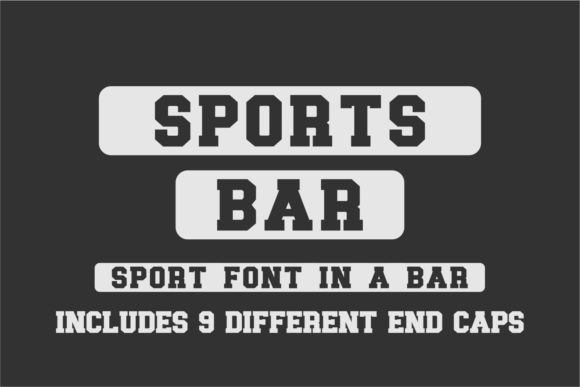
Designed with athletic themes in mind, Sports Bar features chunky letterforms with subtle geometric influences and a sporty edge. The characters are constructed with strong vertical strokes and slightly condensed proportions, giving them a sense of forward momentum. Whether you’re working on a logo for a local gym, creating posters for a community sports league, or designing merchandise for a fitness brand, this typeface brings an authentic athletic vibe that feels both modern and timeless.
Where This Font Truly Shines
Think about the last time you walked past a sports bar or a local athletic store. What caught your eye first? Usually, it’s the signage—the bold, confident lettering that tells you exactly what kind of energy you’ll find inside. That’s exactly the kind of presence Sports Bar brings to a project. It’s not trying to be elegant or understated. It’s unapologetically bold, designed to be seen from across a room or scrolling quickly through a social media feed.
For small business owners running a fitness studio, sports equipment shop, or even a local pub that screens games, this font offers a practical solution for creating consistent branding materials. Use it on your storefront signage, business cards, menu headers, and social media posts. The visual consistency you achieve by using the same typeface across all touchpoints helps customers recognize your brand instantly, whether they’re seeing a flyer at the local gym or an Instagram story on their phone.
Practical Applications for Real Projects
Let’s talk specifics. A youth soccer league needs uniforms, banners, and registration forms. A personal trainer wants to create workout guides and social media content that feels energetic. A craft brewery wants to launch a new IPA with a label that appeals to sports fans. In each case, the typography needs to match the energy of the product or service. Sports Bar fits naturally into these scenarios because it was designed with this exact kind of work in mind.
Consider these real-world uses:
- Logo design: The bold weight and clean lines make it suitable for primary logos or secondary wordmarks that need to stand alone without additional graphics.
- Packaging design: For products marketed to active consumers—protein powders, energy drinks, athletic wear—the font communicates performance and reliability.
- Social media graphics: Bold display fonts perform well on platforms where users scroll quickly. A strong headline in Sports Bar can stop thumbs and increase engagement.
- Merchandise: T-shirts, hats, and gym bags benefit from typefaces that look good at various sizes and remain legible when printed on fabric.
- Event posters: Whether it’s a local 5K run, a championship game viewing party, or a fitness challenge, the font sets the tone before anyone reads the details.
- Website headers: When used sparingly for headlines and call-to-action buttons, it adds personality to an otherwise clean web design.
The key is matching the font’s personality to your project’s goals. If you’re designing something meant to feel high-energy and competitive, Sports Bar delivers. If you’re working on a formal invitation or a luxury brand, you’d want to explore more refined options like a classic serif font or an elegant script font. Understanding this distinction is what separates good design from great design.
Pairing and Readability Considerations
No display font works in isolation. The real skill in typography comes from knowing how to pair fonts together effectively. Sports Bar works best when it’s the star of the show—the headline, the logo, the big statement. For body text or supporting information, you’ll want to pair it with something more neutral. A clean sans serif font works well for digital projects, while a simple serif font can add a touch of tradition for print materials.
Try this combination for a sports blog: use Sports Bar for the main article title, a modern sans serif like Montserrat or Open Sans for subheadings, and a highly readable sans serif for body copy. This creates a clear visual hierarchy that guides the reader’s eye naturally from the most important information to the supporting details.
Readability is always worth testing before you commit. Sports Bar is designed for display purposes, which means it excels at larger sizes. At small sizes, particularly in long paragraphs, it may lose some of its impact and become harder to read. This isn’t a flaw—it’s simply the nature of display typography. Smart designers know when to use bold display fonts and when to switch to something more functional for extended reading.
Making It Work for Your Brand
One of the most overlooked aspects of choosing a font is licensing. If you’re creating materials for commercial use—selling products, promoting a business, or creating client work—you need to ensure you have the proper commercial license. Many premium fonts, including Sports Bar, come with licensing options that cover different use cases. Always review the license terms before starting a project to avoid headaches later.
For content creators and marketers, investing in a quality typeface like this is a practical decision. The difference between a free font with limited weights and a professionally designed typeface often shows up in the details—consistent spacing, thoughtful kerning, and multiple style options that give you flexibility across different applications. A font family that includes bold, regular, and condensed versions saves you time and ensures your designs look cohesive whether you’re creating a small social media graphic or a large-format banner.
Think about how your audience perceives your brand. A fitness influencer using a playful handwritten font for workout tips might confuse followers who expect something more authoritative. A sports equipment store using a generic default font on its website might struggle to convey the quality of its products. Typography is one of the fastest ways to communicate your brand’s personality, and choosing a font that aligns with your audience’s expectations creates an immediate connection.
Whether you’re a designer building a brand identity system, a small business owner creating marketing materials on a budget, or a hobbyist working on a passion project, the fonts you choose matter more than most people realize. They’re not just letters on a page—they’re the visual voice of your message. And when that message involves energy, competition, and athletic spirit, having the right typeface in your toolkit makes all the difference.