Neutro: The Bold Typeface That Brings Your Ideas to Life
There’s a specific kind of energy you feel when a design finally clicks. It’s that moment when the message isn’t just readable—it’s felt. For many of us juggling branding, social content, and marketing materials, finding that perfect visual voice can be a challenge. We often default to safe, neutral fonts, but sometimes, a project demands more presence. It needs a voice that’s confident, modern, and impossible to ignore. That’s where a typeface like Neutro comes in, offering a bold, chunky foundation that can transform a good concept into a standout piece of visual communication.
More Than Just Letters: The Personality of a Chunky Display Font
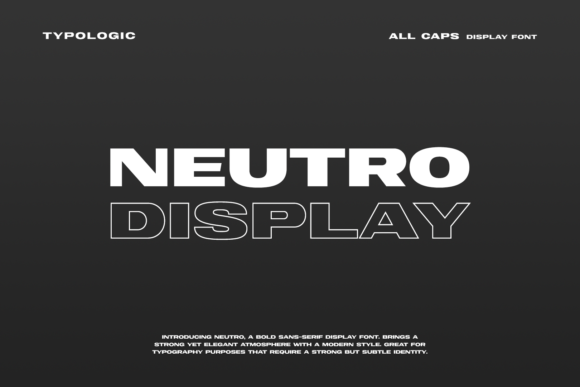
At its core, Neutro is a display typeface, designed to make an impact in larger sizes. Its defining characteristics are its bold weight and intentionally chunky, geometric letterforms. This isn’t a font that whispers; it speaks with clarity and authority. The rounded terminals and uniform stroke widths give it a friendly yet assertive personality, making it surprisingly versatile. It avoids the harshness of some ultra-bold fonts, instead offering a solid, approachable feel that works for everything from tech startups to lifestyle brands.
Think about the visual noise we all navigate daily. On a crowded social media feed, in a stack of business cards, or on a busy retail shelf, your design has seconds to capture attention. A typeface with this kind of visual weight creates an immediate focal point. It anchors your layout and ensures your key message—the brand name, the headline, the call-to-action—is the first thing people see. This is the practical power of choosing the right display font for your primary messaging.
Practical Applications: Where Neutro Truly Shines
The real test of any design asset is its utility. How does it perform across the different touchpoints of a project? Here’s where a bold, modern typeface like this earns its place in your toolkit.
Building a Recognizable Brand Identity: Your logo is the cornerstone of your brand identity. Using Neutro for your primary wordmark or logotype instantly injects personality. It suggests confidence and modernity. Paired with a simple sans-serif for body copy, it creates a clear hierarchy that’s both professional and engaging. This combination works brilliantly for brand guidelines, business stationery, and all digital platforms.
Commanding Attention in Packaging and Posters: For product packaging, shelf appeal is everything. Neutro’s chunky letterforms can make a product name or key benefit pop, even from a distance. Similarly, for event posters or promotional flyers, it serves as a powerful headline font that draws the eye and conveys the event’s vibe—whether it’s energetic, innovative, or stylish.
Creating Scroll-Stopping Social Media Graphics: Content creators and marketers know the battle for attention on Instagram, TikTok, or Pinterest. Using this typeface for text overlays on images, quote graphics, or promotional posts can dramatically increase engagement. Its boldness ensures your message is legible even on small mobile screens, helping to improve visual consistency across your feed.
Designing Impactful Editorial and Marketing Materials: In a magazine layout, a blog header, or a marketing brochure, a strong display font guides the reader’s eye. Use it for chapter titles, pull quotes, or section headers to break up text and add visual interest. For digital products like ebook covers or online course graphics, it lends a premium, polished feel that can elevate perceived value.
Smart Pairings and Practical Considerations
Using a bold display font effectively isn’t just about slapping it on everything. The key is strategic pairing and thoughtful application.
Finding the Right Contrast: Because Neutro has such a strong presence, it pairs best with more neutral, clean typefaces for body text. A simple sans-serif like Open Sans, Lato, or Montserrat creates a harmonious balance. For a more classic or editorial feel, a readable serif like Merriweather or Lora can provide elegant contrast. The goal is to let the display font do the heavy lifting for headlines while the secondary font ensures long-form text remains comfortable to read.
Mind the Context and Scale: As a display font, it’s optimized for larger sizes. Using it for lengthy paragraphs or small footnotes would compromise readability. Always test your designs at the intended viewing size. Will that social media graphic text be clear on a phone? Will the poster headline be legible from across the room? This practical testing is a non-negotiable step in the design process.
Explore the Included Styles: A quality premium font often comes with more than one weight or style. Check if the version you’re considering includes variations like Regular, Bold, or even italicized options. Having a family of styles gives you more flexibility to create subtle hierarchies and nuanced designs without needing to introduce another typeface.
Integrating a Creative Font Into Your Workflow
Adopting a new typeface is like adding a new tool to your workshop. It opens up new possibilities but requires some practice to master. Start by applying Neutro to a low-stakes project, like a personal social media post or an internal document, to get a feel for its character. Experiment with letter spacing (tracking) and line height (leading) to see how it affects the overall tone.
Remember to consider your audience and project goals. The chunky, modern vibe of this typeface might be perfect for a fitness brand, a creative agency, or a trendy coffee shop, but it might feel out of place for a law firm’s annual report. Aligning your typography choices with your brand’s voice and your audience’s expectations is crucial for effective communication.
Finally, always verify the licensing. If you’re using the font for commercial projects—client work, merchandise for sale, or marketing materials for your business—you need to ensure you have the proper commercial license. This protects you legally and supports the type designers who create these valuable assets. A font is a critical piece of intellectual property in your design toolkit.
Ultimately, the goal of any design element is to serve the message. A typeface like Neutro, with its bold and approachable character, is a powerful tool for cutting through the noise. It helps you present your ideas with confidence and clarity, making them not just seen, but remembered. By understanding its strengths and applying it thoughtfully, you can indeed make your most creative concepts come alive.