Jelly Bean Font: A Sweet Addition to Your Design Toolkit
There's a particular kind of joy that comes from a design that feels genuinely playful. It’s not just about bright colors, but about a shape, a curve, a weight that communicates happiness before a single word is read. If your work involves creating for children, celebrating sweet occasions, or building a brand around fun, you know the challenge of finding a typeface that carries that specific, cheerful energy. Enter Jelly Bean, a display font that doesn't just sit on the page—it bounces.
Understanding the Anatomy of a Playful Typeface
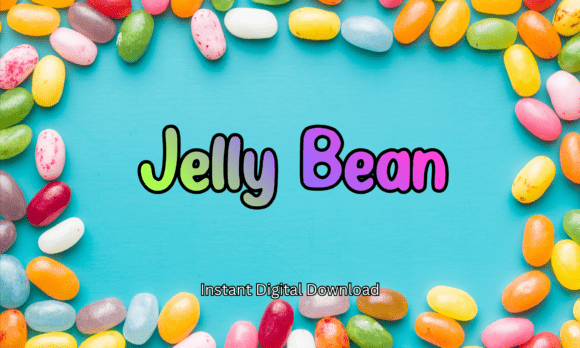
Jelly Bean is fundamentally a candy-inspired display font. This means its primary role is to capture attention and convey a mood rather than to set long blocks of body text. Its visual DNA is built on several key characteristics:
- Rounded Bubble Letters: Each character features soft, rounded terminals and a generous x-height, eliminating sharp corners. This creates a friendly, approachable, and inherently "cute" aesthetic reminiscent of bubble letters drawn with a marker.
- Soft, Fun Aesthetic: The font avoids the harshness of geometric sans-serifs or the formality of serifs. Its uniform stroke width and circular shapes contribute to a harmonious, kawaii-inspired look.
- Playful Handwritten Style: While not a script font, it retains a human, slightly imperfect quality that feels crafted and warm, aligning perfectly with the modern trend toward authenticity in design.
This combination makes it an excellent tool for logo design and brand identity for businesses that want to communicate whimsy, nostalgia, or childhood wonder. Think beyond just candy shops—consider toy stores, pediatric offices, family-friendly cafes, or educational apps for young children.
Practical Applications: Where Sweet Typography Shines
The true value of a creative font like Jelly Bean is measured in its versatility across real projects. Its cheerful demeanor makes it a natural fit for a wide range of creative and commercial applications.
Branding and Packaging Design
For a small business, packaging design is a critical touchpoint. Using Jelly Bean for product names on bakery boxes, candy wrappers, or children's snack labels instantly communicates the product's fun nature. It pairs beautifully with clean sans-serif fonts for ingredient lists, maintaining both personality and readability. In logo design, it can serve as the wordmark for a brand, with its unique shapes making it highly memorable and aiding brand recognition.
Print Materials and Invitations
This is where the font truly excels. Birthday invitations, baby shower announcements, and party decorations gain an immediate dose of excitement. Its legibility at medium sizes makes it perfect for headers on posters or flyer titles. For scrapbooking and DIY crafts, it provides a professional, polished look without requiring advanced design skills.
Digital Presence and Social Media
In the crowded space of social media graphics, a distinctive typeface helps your content stand out. Jelly Bean is ideal for creating engaging Instagram Stories, Facebook post headers, or Pinterest pins that promote sales, events, or new products. For web design, it can be used strategically for button text, promotional banners, or section headers to break up monotony and guide the user's eye with a touch of delight.
Making It Work: Pairing and Professional Use
While Jelly Bean is a standout display font, effective design is about balance. Relying solely on a decorative font can overwhelm a layout and hinder communication. The key is thoughtful font pairing.
A strong practice is to combine it with a neutral, highly readable typeface. A simple sans-serif like Lato, Open Sans, or Montserrat for body text creates a clear hierarchy, letting Jelly Bean command attention for headlines without sacrificing the professionalism of the overall presentation. For a more whimsical yet still legible body text, a clean, rounded sans-serif can complement its playful curves.
Before finalizing any project, especially those for commercial use, always test your typography. View it on different devices and at various sizes. Does the invitation header remain legible when printed at a smaller scale? Does the social media graphic maintain its charm on a mobile screen? This testing phase is crucial for ensuring your design achieves its goal of engaging your specific audience, whether they are parents, young children, or fellow creatives.
Considering the Practicalities: Licensing and Assets
When selecting a premium font for commercial projects, understanding what you're purchasing is vital. A complete package like this typically includes multiple file formats—TTF and OTF ensure broad compatibility. The inclusion of uppercase, lowercase, numbers, and symbols provides the full toolkit needed for diverse projects.
Most importantly, verify the licensing. A font marked for "Commercial Use Included" allows you to use it in client work, merchandise for sale, and branded materials without additional fees. This is a critical consideration for designers, small business owners, and entrepreneurs who plan to monetize their creations. Always review the specific license agreement to understand any limitations on usage, such as in software or on a number of devices.
Ultimately, a typeface like Jelly Bean is more than just a set of characters; it's a design asset that injects a specific emotional tone into your work. By understanding its visual strengths, applying it to appropriate contexts, and pairing it wisely, you can leverage its playful charm to create designs that are not only beautiful but also effective in connecting with your audience. It’s about adding that precise burst of sweetness that makes your project memorable.