Rotstamp: When Your Design Needs to Look Like It Survived Something
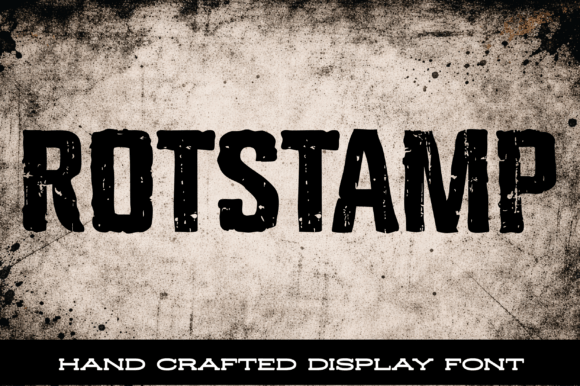
Some fonts whisper. Rotstamp clears its throat, spits on the concrete, and leaves a mark you can feel with your fingertips. This isn't a typeface for polite corporate reports or delicate wedding invitations—unless that wedding has a zombie theme and the invitations arrive in distressed kraft paper. Rotstamp is a bold, distressed display font that captures the raw grit of worn ink and decaying print. Inspired by vintage rubber stamps, industrial markings, and weathered signage, each character carries natural imperfections, rough edges, and broken texture that give it an authentic, aged feel. Built for impact, Rotstamp delivers strong, blocky letterforms with just enough chaos to feel alive.
The Psychology of Worn Typography
There's a reason distressed fonts have such a powerful pull on our attention. In a world saturated with sleek digital perfection, something that looks handmade, weathered, or slightly broken feels more honest. Rotstamp taps into that psychological space where imperfection equals authenticity. The uneven edges, the spots where ink didn't quite take, the subtle variations in texture—these details tell a story of use, of time passing, of something that has been through the wringer and come out the other side with character.
This makes it particularly effective for brands that want to communicate toughness, heritage, or an anti-establishment edge. Think craft breweries that name their IPAs after storms, motorcycle gear companies, survivalist podcasts, or indie record labels pressing vinyl. When your audience sees typography that looks like it's been pressed, worn, and left to rot, they immediately understand something about your brand's values before reading a single word of copy.
Where Rotstamp Actually Works in Real Projects
Let's get practical. You've downloaded a premium font like Rotstamp—now what? The temptation with a bold display font is to use it everywhere, which almost always backfires. Here's where this typeface genuinely earns its place in your design toolkit.
Logo design and brand identity are natural fits, especially for companies in outdoor recreation, artisanal food production, tattoo studios, or any brand with a rugged personality. A logo set in Rotstamp immediately signals that you're not trying to be precious. Pair it with a clean sans serif font for body copy, and you've got a brand identity that balances impact with readability.
Packaging design is another sweet spot. Imagine a hot sauce label, a bag of small-batch coffee, or a craft beer can—Rotstamp on the product name creates instant shelf presence. The distressed texture suggests something made by hand rather than mass-produced, which can justify a premium price point in consumers' minds.
Poster and merchandise design practically begs for this kind of typeface. Band posters, event flyers for haunted houses, limited-edition t-shirt graphics, or even protest signs—Rotstamp brings an energy that polished modern typography simply cannot replicate. The key is using it for headlines and display text, not for paragraphs of information that people need to actually read.
Pairing Rotstamp with Other Typefaces
No font works in isolation, and that's especially true for a display font with this much personality. The general rule with highly stylized typefaces is contrast. If Rotstamp is your headline, your body text needs to be the opposite—calm, structured, and easy to read.
A geometric sans serif like Futura or Montserrat creates a clean counterbalance. The smooth, precise letterforms of these fonts make Rotstamp's roughness pop even more. For a different vibe, try pairing it with a simple serif font—something like a modern transitional serif that offers just enough elegance to ground the chaos without competing for attention.
Avoid pairing Rotstamp with other distressed fonts, script fonts, or handwritten fonts. That combination creates visual noise where nothing stands out, and your audience won't know where to look. Think of typography pairing like casting a movie: you need a leading character and supporting actors, not two leads fighting for the spotlight.
Test your pairings at actual size. A font combination that looks balanced on your 27-inch monitor might feel completely different on a phone screen or a printed poster viewed from ten feet away. Rotstamp's texture becomes more pronounced at larger sizes, which is generally where you want to use it anyway.
Readability Isn't Optional—Even with Gritty Fonts
Here's where many designers trip up with distressed display fonts. The whole point of typography is communication. If people can't read your words, the coolest texture in the world doesn't matter. Rotstamp's character shapes are intentionally bold and blocky, which helps maintain legibility even with the distressed treatment. But you still need to exercise judgment.
Use Rotstamp for short, high-impact text: brand names, taglines, single-word headers, event titles, or call-to-action phrases. Don't set a paragraph in it. Don't use it for body copy on a website. Don't make someone squint to figure out whether that's an "R" or a "K" in your product name. At small sizes, the texture that makes Rotstamp special becomes visual mud.
Color contrast matters too. Rotstamp in a muted tone on a similarly muted background will lose all its character. Give it enough contrast—light texture on dark backgrounds or dark texture on light backgrounds—to let those imperfect edges read clearly.
Licensing and the Business Side
If you're using Rotstamp for client work, merchandise you plan to sell, or any commercial project, make sure you understand the licensing terms that come with your purchase. Most premium fonts offer different license tiers: desktop, web, app, and extended commercial. A desktop license typically covers creating logos and print materials. If you're embedding the font in a website using @font-face, you'll need a web license. Selling t-shirts with Rotstamp text might require an extended license depending on the foundry's terms.
This isn't just legal fine print—it protects you from headaches down the road. Spending twenty minutes reading the license agreement now saves you from a cease-and-desist letter later. When in doubt, contact the foundry directly. Most are happy to clarify what their licenses cover.
Making It Your Own
The best use of any creative font happens when designers treat it as a starting point rather than a finished product. Rotstamp's distressed texture gives you incredible raw material, but layering it with subtle effects—slight color overlays, texture masks, or offset printing simulations—can push the aesthetic even further. Some designers combine multiple weights or styles of the same font family, alternating between cleaner and more distressed versions to create visual hierarchy within headlines.
Consider the context of your entire design system. Rotstamp works beautifully when the rest of your visual language supports the same mood. Pair it with raw photography, textured backgrounds, muted earth tones, or high-contrast black-and-white imagery. If your website features crisp, corporate photography with clean white backgrounds, Rotstamp might feel jarring rather than intentional.
The most effective use of any typeface—distressed or otherwise—comes from understanding the story you're trying to tell and choosing tools that reinforce that narrative. Rotstamp isn't for every project, and that's exactly what makes it powerful. When you reach for this font, you're making a deliberate choice to communicate something raw, authentic, and unapologetically bold. Use it with that intention, and your designs will carry the kind of presence that polished perfection simply can't match.