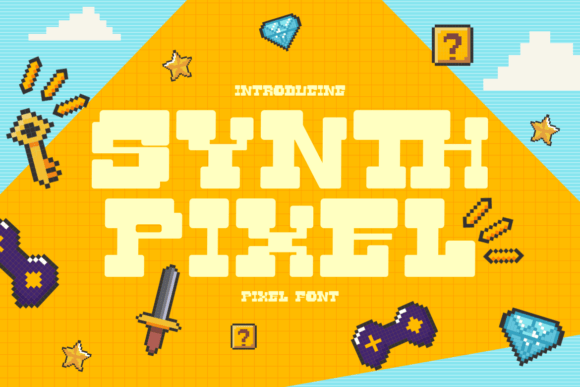
Synth Pixel: Where Nostalgia Meets Modern Design
There’s something undeniably magical about the glow of a CRT screen and the chunky, colorful letters that once spelled out our high scores and game saves. That feeling of digital childhood isn’t just a memory; it’s a powerful aesthetic force. Enter Synth Pixel, a display typeface that doesn’t just mimic the past—it remixes it. This isn’t a simple retro copy-paste. It’s a thoughtfully crafted pixel font that bridges the gap between the charming blockiness of 8-bit consoles and the sleek, dimensional energy of Y2K design. If your project needs a dose of joy, nostalgia, and unmistakable personality, this might be the creative asset you’ve been searching for.
A Typeface with Built-In Character and Dimension
What sets Synth Pixel apart in a sea of retro-inspired fonts? First, look at its construction. The letterforms are square-based, giving them that classic, sturdy foundation we associate with early video game UI. But they’re enhanced with smooth geometric edges and vibrant outlines, a subtle nod to the more polished aesthetic of the late 90s and early 2000s. This creates a unique visual tension: it feels familiar yet fresh. The font includes both flat and shadow-stacked variations, allowing you to instantly add depth and a tactile, almost 3D quality to your headlines. This built-in versatility means you can shift from a clean, minimalist poster to a bold, layered arcade logo without switching typefaces.
From a practical standpoint, the font includes a full character set: uppercase, lowercase, numerals, and comprehensive punctuation. This completeness is crucial. It means you can use Synth Pixel for everything from a short, punchy brand name on a logo to longer, engaging copy on a website or social media graphic, all while maintaining that cohesive retro-futuristic vibe. It’s a premium font designed for real-world application, not just a decorative snippet.
Practical Applications: From Pixels to Profits
So, where does this typeface truly shine? Its personality is a perfect match for projects that need to communicate fun, creativity, and a touch of digital heritage. Think beyond the obvious (though it is fantastic for indie game titles and Twitch overlays). Consider these applications:
- Brand Identity & Logo Design: For a tech startup, a retro-themed café, a podcast about gaming culture, or a line of creative merchandise, Synth Pixel can become the cornerstone of a memorable brand identity. A logo set in this font instantly tells a story of innovation and playfulness.
- Packaging & Merchandise: Imagine this font on a coffee bag for a "Morning Quest" blend, on labels for craft soda, or emblazoned across t-shirts, tote bags, and enamel pins. It adds a layer of collectible, nostalgic charm that resonates with consumers.
- Digital Presence: Use it for YouTube thumbnails that pop, social media graphics that stop the scroll, or headers for a blog focused on design, gaming, or pop culture. It ensures your digital content feels cohesive and visually engaging.
- Print & Editorial: It’s surprisingly effective in editorial design for headlines in magazines, posters for events, or even stylized wedding invitations with a geek-chic theme. The key is using it strategically for impact, not for body text.
- Marketing & Packaging: Create standout marketing assets like sale banners, email headers, or product packaging that needs to communicate value and personality quickly. Its blocky nature ensures readability at a glance, even in busy environments.
Making It Work: Pairing, Readability, and Professional Polish
Integrating a strong display font like Synth Pixel into a project requires a bit of strategy to maximize its impact and maintain professionalism. Here’s some practical advice for getting it right.
First, consider your font pairing. Because Synth Pixel is so bold and stylistic, it demands a complementary partner for longer text. Pair it with a clean, neutral sans serif font for body copy or subheadings. A simple geometric sans serif or even a humanist sans will create a harmonious balance, letting the pixel font be the star without overwhelming the viewer. Avoid pairing it with another highly decorative script font or handwritten font, as this can create visual clutter and hurt readability.
Speaking of readability, this is a critical consideration. Synth Pixel is a creative font optimized for display sizes. Use it for headlines, logos, short calls-to-action, and other prominent elements where its personality can shine. For paragraphs of text, always opt for a more traditional, legible typeface. Test your designs at various sizes and on different screens to ensure the pixel details remain clear and don’t become muddy.
Finally, always review the included font styles and licensing. Knowing you have access to both flat and shadow-stacked versions allows for creative flexibility. For any commercial font, ensure your license covers your intended use—whether for client work, merchandise for sale, or digital products. This due diligence protects your project and respects the work of the type designer.
Bridging Eras for Timeless Appeal
Ultimately, Synth Pixel is more than just a retro font. It’s a versatile design asset that taps into a deep well of cultural nostalgia while feeling completely contemporary. It allows designers, entrepreneurs, and creators to inject a specific kind of energy—one that’s optimistic, tech-forward, and deeply human—into their work. Whether you’re building a brand from the ground up or adding a fresh layer to an existing project, this typeface offers a unique way to connect with an audience that appreciates both the history and the future of digital design. It’s a tool for storytelling, one perfectly rendered pixel at a time.