Artdeco Arto: When Typography Becomes a Mural
Forget everything you know about functional text. Most fonts are designed to be obedient, to sit quietly on a page and convey information without making a fuss. But what if your typography refused to be a background player? What if every letter you typed was a standalone piece of art? This is the reality of the Artdeco Arto typeface, a premium font that treats the alphabet not as a set of symbols, but as a gallery of canvases. For the creative professional tired of the monotony of standard sans serif and serif font options, Arto offers a blast of maximalist energy that turns standard headlines into explosive, visual collages.
Beyond the Outline: The Visual Language of Arto
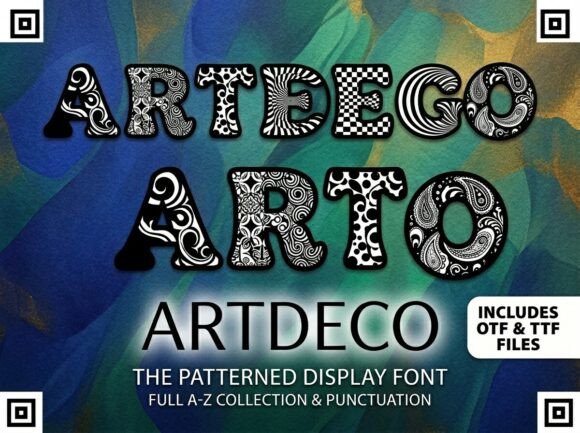
In the realm of modern typography, legibility is usually the king, but in the world of display font design, expression rules the kingdom. Artdeco Arto is a fascinating study in how a typeface can maintain a "chunky" silhouette while completely abandoning solid fills. Instead of a standard black or white interior, each glyph is filled with a dizzying, eclectic mix of patterns. We are talking about mesmerizing optical illusions that seem to shift as you stare at them, retro checkerboards that ground the design in vintage aesthetics, and groovy waves that bring a sense of movement to static text.
But it doesn’t stop at geometry. The font incorporates organic elements like paisley whorls and abstract botanical doodles. This creates a unique tension between the rigid structure of the letterform and the chaotic freedom of the fill. For a graphic designer, this is a game-changer. You aren't just choosing a typeface; you are selecting a texture and a mood. The visual density of the letters means that even a single word creates a significant impact, making it an ideal candidate for statement poster designs or the hero section of a website.
Practical Magic: Where Maximalism Meets Marketing
You might be wondering, "This looks incredible, but where do I actually use it?" This is a valid concern for any business owner or marketer. While Artdeco Arto might not be the best choice for your legal disclaimers or long-form blog posts, its utility in the world of visual communication is vast. This is a creative font engineered for the "stop-scroll" moment.
Consider the world of packaging design. In a crowded market, a retro-pop package featuring Arto can instantly signal a brand that is playful, artistic, and unafraid to stand out. It speaks to a demographic that appreciates craft and creativity. Similarly, in branding, particularly for streetwear graphics or festival branding, this font serves as an immediate identifier of style. It tells the audience that the brand values aesthetics and avant-garde design over corporate sterility.
Here are a few high-impact scenarios where Arto shines:
- Editorial Design: Use it for drop caps or pull quotes in a magazine layout to break the grid and inject personality.
- Social Media Graphics: Create Instagram Stories or Pinterest pins that demand attention. The intricate details of the font encourage users to zoom in and engage with the content.
- Artistic Merchandise: Think tote bags, t-shirts, or album covers. The font is dense enough to serve as a graphic element on its own, reducing the need for additional illustration.
- Event Branding: Whether it’s a music festival or an art exhibition, the typeface sets a tone of creative celebration.
Mastering the Chaos: Readability and Font Pairing
When you decide to use a font as intricate as Artdeco Arto, you enter a delicate balancing act between flair and function. Because the letters are filled with detailed patterns—checkerboards, waves, and doodles—readability is naturally lower than that of a clean sans serif font. This is why it is strictly a display typeface. It is meant for large sizes, headlines, and logos, not for body copy.
To ensure your design remains professional and your message gets across, you must master the art of font pairing. You need a grounding element. A clean, geometric sans serif font works beautifully as a companion. It provides a quiet resting place for the eyes after the visual feast of the Arto headlines. Alternatively, a simple serif font can add a touch of classic elegance that contrasts with Arto's funky, doodle-filled interior.
When designing, ask yourself: What is the hierarchy? Use Arto for the primary hook—the brand name or the main headline—and switch to your secondary font for the supporting information. This approach ensures visual consistency without overwhelming the viewer. It allows you to maintain the explosive energy of the display font while preserving the professional presentation required for clear communication.
Strategic Branding: Creating Recognition with Texture
Brand identity is about recognition. When a customer sees a specific color palette or a specific typeface, they should immediately connect it to a feeling or a company. By utilizing a unique asset like Artdeco Arto, you are building a brand identity that is distinct and difficult to replicate. The "abstract botanical doodles" and "paisley whorls" aren't just decoration; they are texture. Texture in design adds depth and tangibility to digital assets.
For creative entrepreneurs and content creators, this depth is invaluable. It suggests that there is a human hand behind the work. In an era of AI-generated smoothness and flat, corporate minimalism, a hand-drawn, maximalist aesthetic stands out. It signals authenticity. Whether you are selling digital products, designing invitations, or creating marketing assets for a launch, the distinct character of this typeface helps build a narrative around your brand.
Technical Considerations for the Creative Professional
Before integrating any new design asset into your workflow, practical considerations must be addressed. First, always review the licensing. If you are using Artdeco Arto for a client project or merchandise, ensure you have the appropriate commercial font license. This protects both you and your client.
Next, consider the medium. While this font is a powerhouse for print and high-resolution screens, test it on smaller mobile devices. The intricate patterns inside the letters might lose definition on very small screens, so ensure your responsive web design strategy accounts for this. You might need to simplify your headers for mobile views while keeping the full glory of the font for desktop users.
Finally, experiment with color. A font filled with optical illusions and groovy waves reacts differently to color than a solid font. Try layering it over textured backgrounds or using vibrant color combinations to accentuate the retro-pop vibe. The goal is to treat the typeface not just as text, but as a central piece of your visual composition.
Ultimately, Artdeco Arto is more than just a collection of glyphs; it is a declaration of style. It challenges the viewer to look closer and invites the designer to break free from the safety of neutral typography. For projects that demand attention and celebrate the eclectic, this typeface is an indispensable tool in the modern creative arsenal.